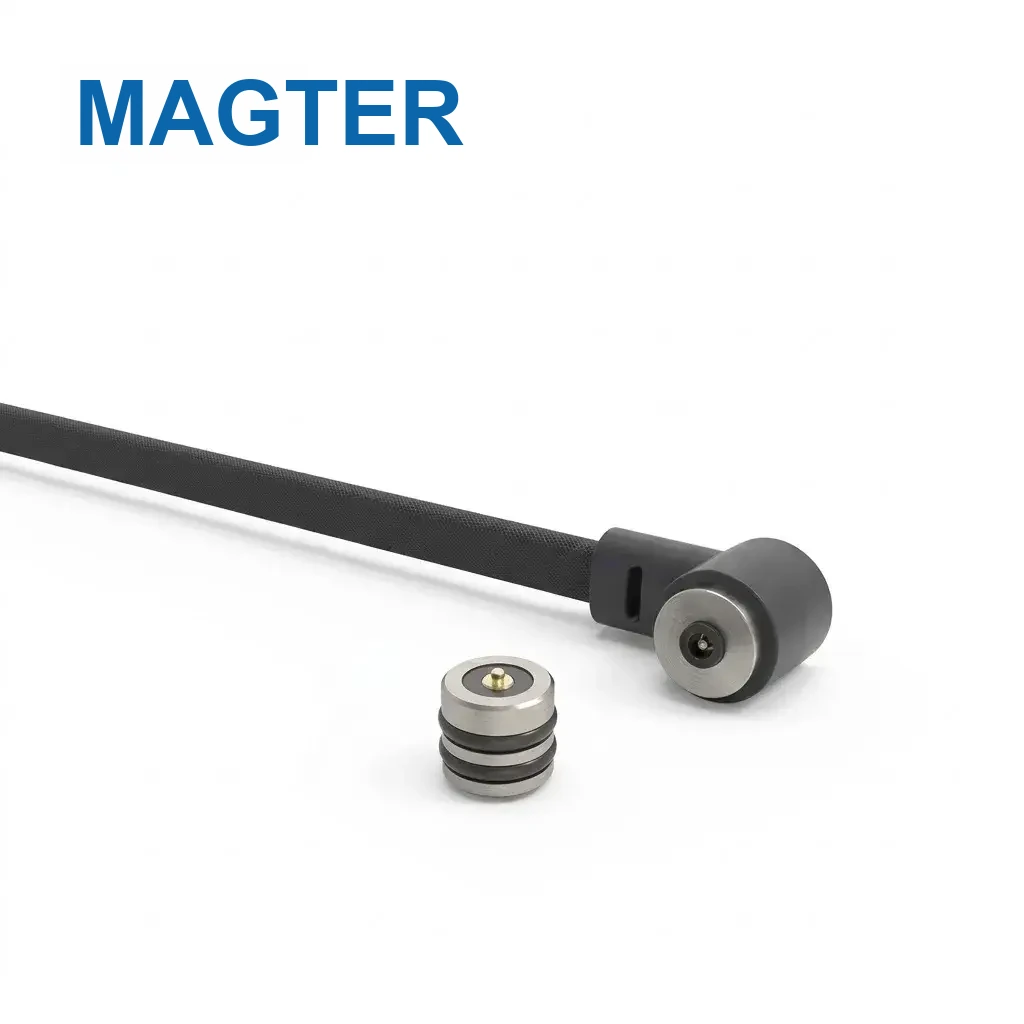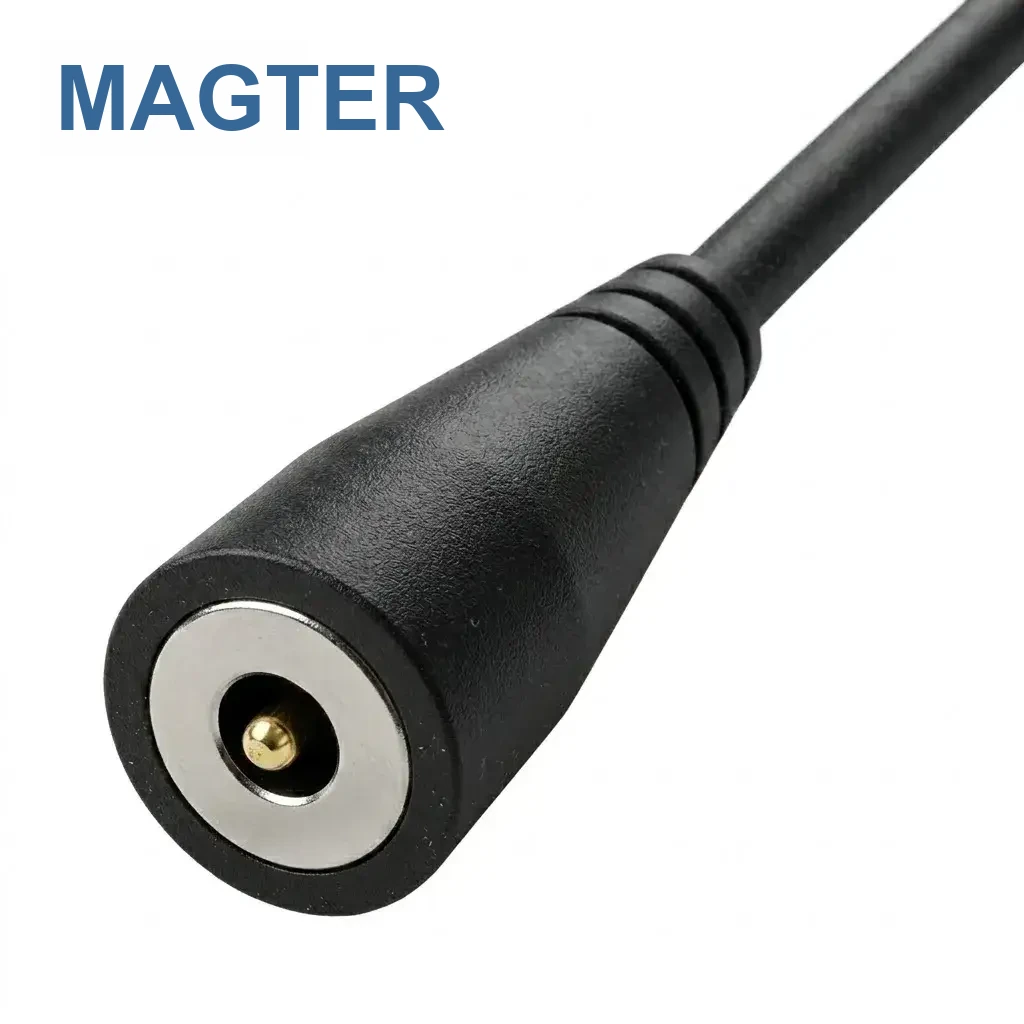
An electric-toothbrush dock may need only a low-voltage power path, or it may also exchange status, identification or service data. The correct solution begins with the device architecture and cleaning environment, not with the appearance of an existing cable.
1. Define the electrical task first
Confirm whether the base provides charging only or also carries data or other signals. Record voltage, current, polarity, grounding and every pin assignment. If communication is required, identify the protocol and the host-side connector before choosing the magnetic interface.
A two-contact charging arrangement and a multi-contact data arrangement can look similar in a photograph but require different conductor, shielding, polarity and validation decisions.
2. Treat the base and cable as one interface
Review the device receptacle, magnetic head, cable and power input together. Available enclosure space, PCB or FPC position, mating direction, allowable rotation and user docking action all affect the contact layout and magnetic circuit.
A previous Yongtan product can be a direction reference, but it is not automatically a drop-in design for a new toothbrush.
3. Review water and cleaning exposure
Toothbrush bases are commonly exposed to droplets, condensation, toothpaste residue and repeated wiping. Define where water can enter, which side needs sealing and how the assembled device will be evaluated. A component-level claim should not be substituted for an assembled-device ingress test.
4. Validate real user behavior
Sample evaluation should include misalignment, rotation, one-handed docking, cable pull direction, contact contamination and repeated placement. Check charging or data continuity in the final enclosure, not only on an open bench.
Release the project only after the approved drawing, pin map, cable construction and acceptance criteria all describe the same sample revision.
Information to send for engineering review
Share the device drawing, base layout, electrical definition, target cable length, input connector, environmental requirement, sample quantity and forecast volume. These inputs let the engineering team compare a connector-only solution with a complete magnetic charging or data cable assembly.
Website guidance supports early selection and communication. Final dimensions, materials, electrical performance and validation requirements follow the project-approved drawings, specifications and test records.